
The Role of Biotin in Reducing Lameness and Lifting Milk Production
When a cow’s feet aren’t right, the rest of her won’t be either. Lame cows eat less, walk less, go off their milk, and are slower to cycle. While lameness is a complex and multi-factored condition, we know that nutrition from the inside-out can make a big difference in creating a strong and healthy hoof.
How Biotin Works
Biotin plays a key role in the building of keratin, the protein that forms the hoof wall. Stronger keratin means stronger hooves that are less prone to cracks, bruises and sole issues. Biotin functions like a ‘glue’, helping to create strong joins in the hoof which is particularly important for the white line which is the critical connection between the sole and the hoof wall.
Biotin also supports key metabolic reactions involved in carbohydrate, fat, and amino‑acid metabolism — all of which influence energy levels, growth, and tissue repair. While rumen microbes do make biotin, high‑producing cows often need more than the rumen can supply, especially during lactation when nutrient demand is high or when a cow’s rumen function is compromised.
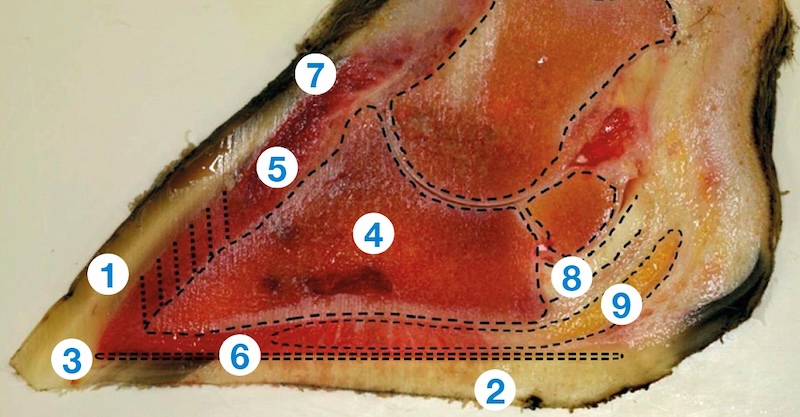
Figure 1: The hoof is a live growing tissue that is influenced by the health and the nutrition of the cow. 1: Wall horn. 2: Sole horn 3: White line 4: Pedal bone 5: Laminar corium 6: Sole corium 7: Coronary band 8:Flexor tendon 9: Digital cushion. Image credit: Agriculture and Horticulture Development Board (AHDB)
Biotin and Milk Production
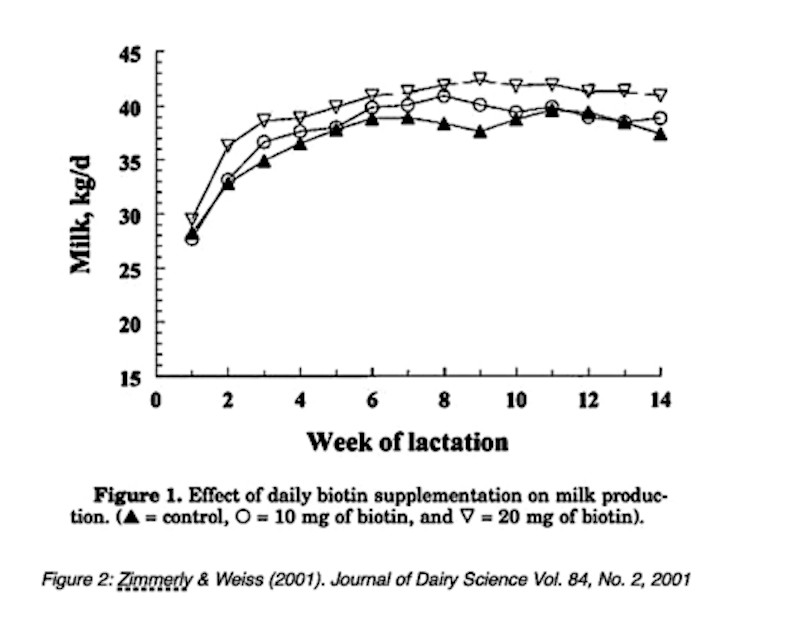
It’s not just hooves that benefit — milk yield does too. A major meta‑analysis study found that biotin supplementation increased milk production by an average of 1.29 kg per cow per day, with consistent upward trends in fat and protein yields. Taking this data¹ into a New Zealand context², biotin would have a significant 25:1 return on investment on milk production alone, not including any benefits to the cow from a lameness perspective.
¹Chen, B., et al. (2011). Effect of biotin on milk performance of dairy cattle: A meta-analysis. Journal of Dairy Science, 94, 3537–3546 and Lean, I., Rabiee, A.R. (2011). Effect of feeding biotin on milk production and hoof health in lactating dairy cows: a quantitative assessment. Journal of Dairy Science, 94(3), 1465–1476.
²Milk responses averages ranged from +1.3 to +1.6kg milk. Given many of these studies were very high producing herds (40kg milk/c/d), if we assume a modest milk production response of 1L/cow/day at 8.5% solids and $10/kgMS then a 20 gram biotin dose will return 85 cents in milk, producing an ROI of 25:1.
How to Use Biotin on Farm
To get the best response, 20mg of biotin per cow per day is recommended. Nutritech have both water soluble and non-soluble forms of biotin available. This means you can add biotin to either feed or water. Biotin can be added on its own or can be blended with trace minerals in a custom formulation to suit your herd. This makes it very easy to feed, with little extra work or effort required.
Biotin works best as a long‑term strategy, not a quick fix. Farmers usually see improvements in hoof quality within a few months, with full benefits showing as new hoof material grows down.
Given rumen health also plays a significant role in lameness, it is recommended to use biotin alongside Levucell®SC live yeast to help stabilise rumen pH, especially during feed and pasture quality changes.
For more information on biotin, or reducing lameness in your herd, get in touch with your friendly and knowledgeable Nutritech Area Manager