
Nexulin’ s role in reducing Ketosis
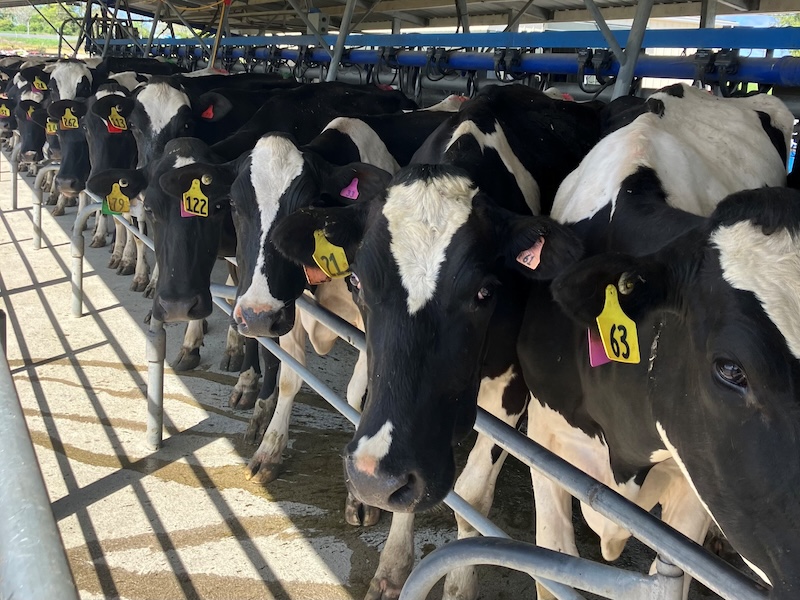
Ketosis is a common problem among herds across New Zealand. When a cow ends up in a negative energy state post calving, she starts mobilising her fat stores and using them as an energy source, resulting in body condition loss. This negative energy balance often leads to reduced milk yields, slower returns to oestrous and reduced conception rates coming into mating. While we can put condition on our cows leading up to calving, it’s equally important we help them to maintain it throughout their lactation. You can achieve this by having the right mechanisms in place through nutritional support combined with the latest research.
How does Nexulin® work
Nexulin® is the first and only source of by-pass capsicum available for ruminants. Its key role is to help reduce the production of insulin within the cow.
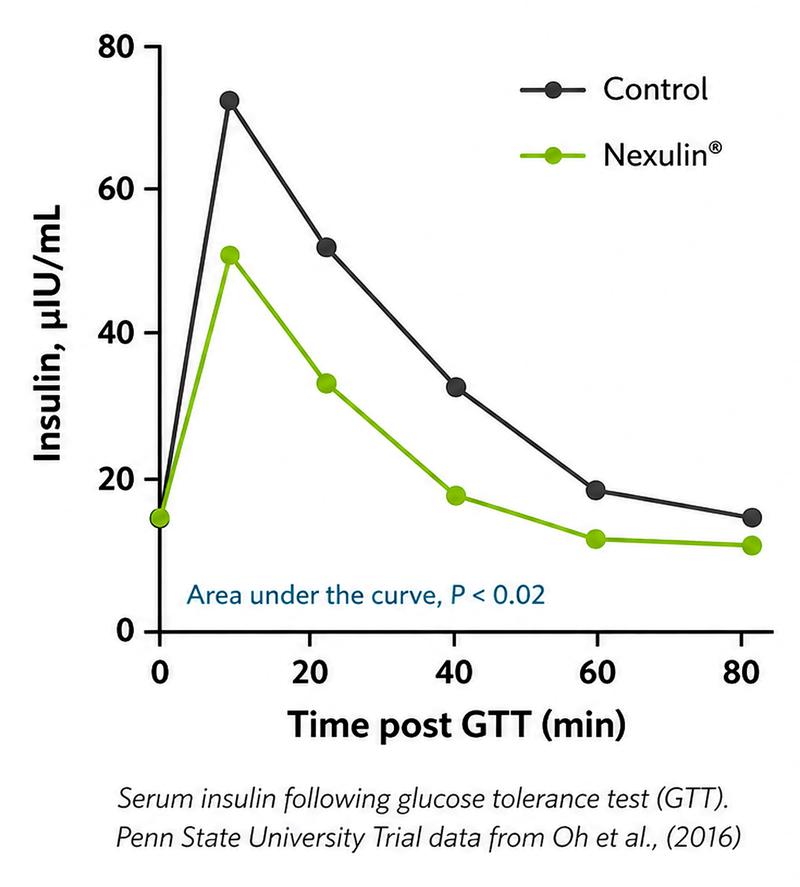
When cows get closer to calving their response to insulin begins to reduce and they often become insulin resistant, limiting their effectiveness to move glucose around to those body tissues that need the energy the most. At the end of the dry period the demand for glucose is increased due to a large growth in the foetus, and in the first few months of lactation due to high production volumes. Lowering insulin production leads to a reduction in insulin resistance, which allows more glucose to be available to the body tissues and to the mammary gland to make milk. This helps cows manage their negative energy balance, therefore reducing ketosis risk.
Nexulin® enables the cow to direct her glucose towards the correct tissues rather than having to rely on her body reserves as a fuel source. By utilising the energy from the diet more efficiently, we see a reduced risk of ketosis post-calving.
Nexulin’s Role in increasing Milk Production
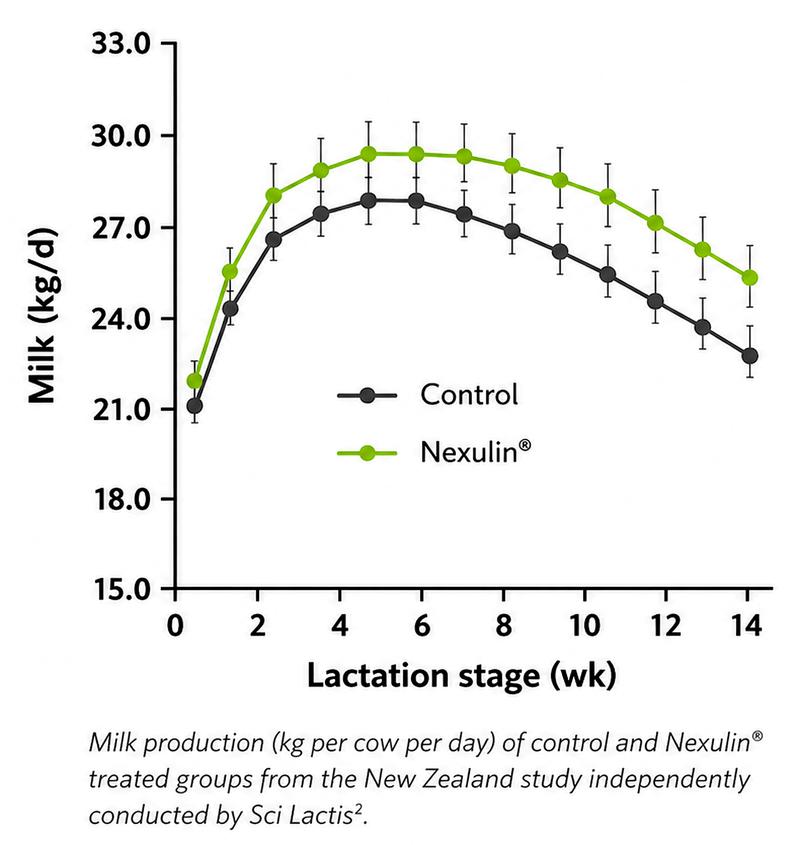
Not only does Nexulin® help reduce ketosis, but it also increases milk yields. A New Zealand study on Nexulin® saw a Milk Solid increase of 8.5%; with another at Penn State University seeing milk yields (kg) lifted by 4.4%. The New Zealand study also observed a decrease in ketosis prevalence from 10.2% down to 1.7%. Based on these results and using the current payout we see Nexulin® deliver a significant return on investment, reaching 20:1 and above. This is only considering the increase in production, not the reproduction benefits from the reduced ketosis risk.
How to use Nexulin® on farm?
Nexulin® has been proven to work best when fed from 21 days pre calving to 100 days post calving – 121 days total. Being a non-soluble product, it must be fed through feed; via feed out/mixer wagons or in-shed systems. It is a red toned, loose powder that can be fed on its own at 5g/cow/day; or at 20g/cow/day when on a salt carrier (whichever suits your system). It can be blended into your transition or trace mineral blend through Nutritech product customisation, making it an easy addition to your current feeding programme.
This upcoming season, consider using Nexulin® in your transition and early lactation by adding it to your NutriMin™ Springer Cow Balancer and AquaTrace® range products.
For more information on Nexulin® or support with reducing ketosis in your herd, get in touch with your local Nutritech Area Manager – they’re always happy to help.