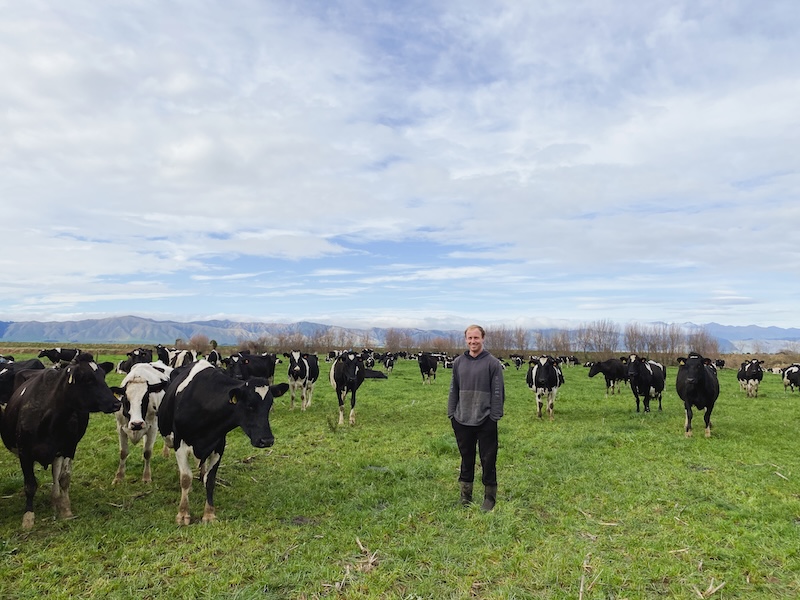
Farming on sand country comes with its own playbook – and often, it’s one that gets rewritten every season.
In wet periods, up to 150 hectares can be lost to flooding. In dry spells, pasture disappears almost overnight. Yet despite these constraints, James Anderson and his team have built a high-performing 1,200-cow herd by focusing on one thing they can control: smart feeding strategies.
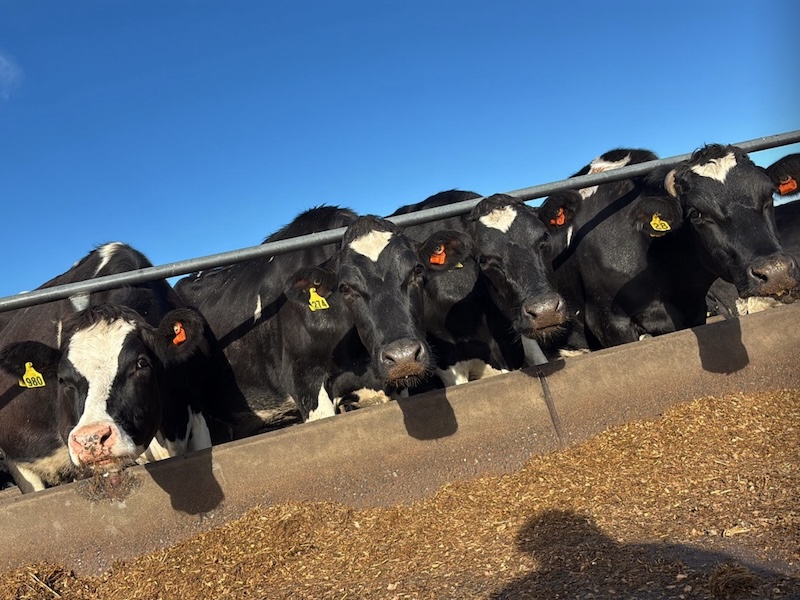
James, together with his parents Richard and Sandra run a split calving system, which means at any given time they’re managing different groups of cows with very different nutritional demands – particularly during the critical springer period.
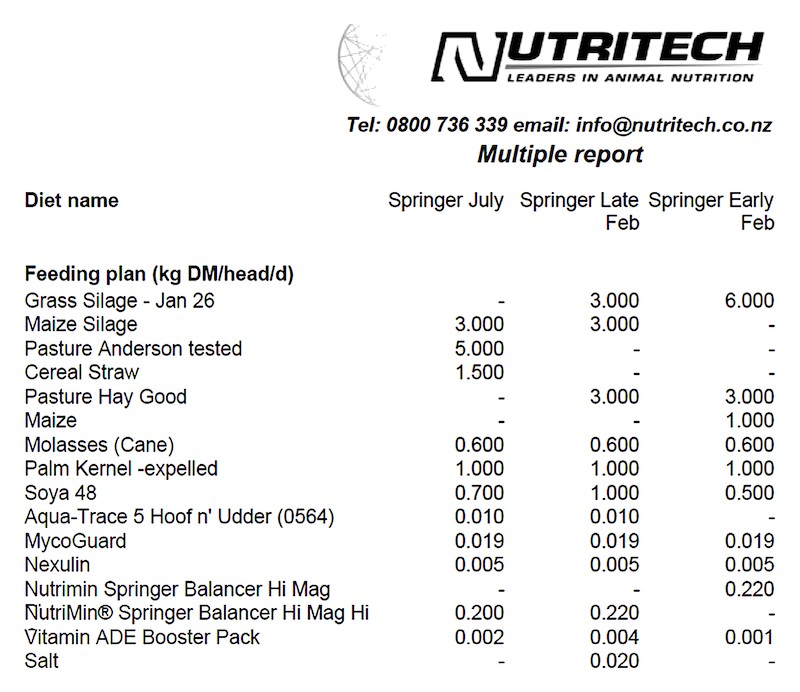
In fact, they routinely operate with three distinct springer diets:
- Autumn Calvers (February): Very little grass available as sand country dries out fast. At this point they are waiting for maize silage to come in, so the springer diet is formulated to balance what feeds are available.
- Autumn Calvers (March): Maize silage enters the diet, changing the nutrient profile and creating new diet imbalances, especially in calcium and vitamin D.
- Spring Calvers (July-September): Cows are on the sand hills, where pasture availability can vary significantly from year to year.
For many farms, this level of variability would mean compromise. For the Andersons, it’s an opportunity to fine-tune and adapt in real time.
This is where the partnership with Nutritech makes a difference. “No matter what feed situation gets thrown at us, we’ve always got a plan,” says James. “It’s about being prepared but also adapting on the fly”.
Using the Diet Check programme, local Area Manager Hunter Aiken works alongside the Andersons to adjust diets as conditions change for both the milkers and the springers. The process is always the same nutrition fundamentals first (fibre, energy and protein), then macro minerals, trace minerals, vitamins and feed efficiency technologies.
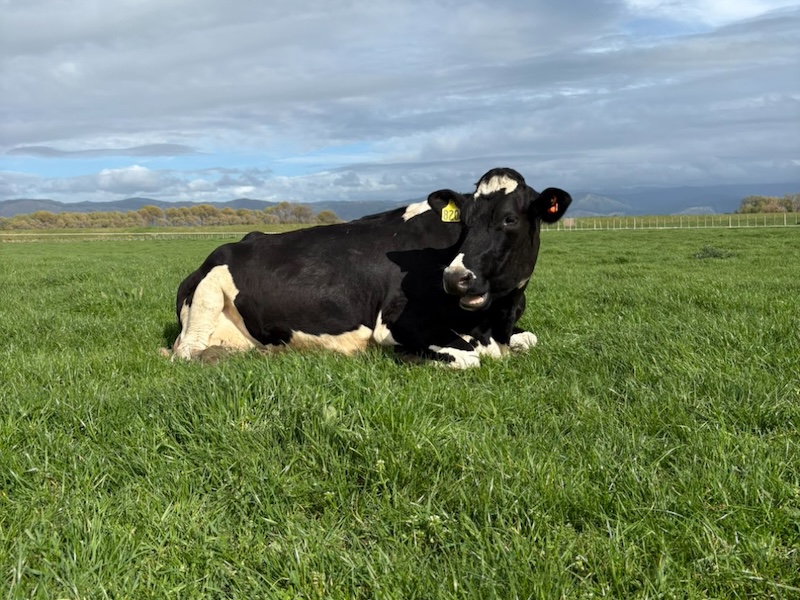
For the springer cows, there is an additional focus on DCAD management, as well as:
- Liver health (the liver is the cow’s glucose engine – and glucose drives lactose production, which in turn drives milk volume).
- Insulin regulation with Nexulin® – a bypass capsicum that aids in keeping more glucose in the blood for the mammary gland (with a 20:1 milk response it’s a “no brainer” for James). You can read more about Nexulin® here → Looking to stop your cows losing weight after calving?
- Levucell SC live yeast – to stabilise rumen function during dietary shifts
- Rumensin™ – as an aid in the control of ketosis
The Andersons put a lot of emphasis on their dry cows, springers and colostrum’s because they know this is when the cows are setting up the milk-making cells. In other words – the entire season’s production depends on the health and nutrition of these groups of cows.
When it comes to production goals for this season, James has set a clear target: 650 kgMS per cow. He knows that to achieve this goal he will need to continue his winning formula – planning, adjusting, and making smart decisions in the moment. Because when turning sand country into a high-performance system, sometimes it takes a little bit of adapting on the fly.